U.S. Space Force Officer's Perspective:
The EU Must Join the U.S. to Protect Our Mutual Interests In, From, and To Space
· By Colonel Raj Agrawal, PhD ·
The views expressed are those of the authors and do not reflect the official guidance or position of the United States Government, the Department of War, the United States Air Force, or the United States Space Force.
It has been six years since U.S. Space Force Brigadier General Christopher Fernengel and I proposed a military approach to “space situational awareness” (SSA), which focuses activities on what the armed forces call “fires” and “maneuver options” (i.e., offensive and defensive operations) to achieve national security objectives. SSA has since become the driving force for any military engagement or intelligence mission involving space. “Space Domain Awareness” (SDA), which builds on SSA but applies to targeting and defending against hostile satellites.
This concept of targeting satellites follows the military’s goal of using them to strike objects in other domains. The size of the U.S. armed forces is now based on a presumption that such space capabilities will be available to them, and that these capabilities allow for maximum reach and minimal collateral damage with little to no loss of friendly forces. For the United States, such space superiority helps ensure that any armed conflict would be an “away game”: a space-enabled attack that pushes the line of enemy contact as far away from friendly territory as possible.
The Space Key
As airpower began with balloons conducting reconnaissance missions for spotting artillery before evolving to drop bombs, the space domain has undergone a similar transformation. Air superiority over territory or lines of communication has long facilitated other military operations, and space superiority now does the same but more expansively. A nation or institution with an advantage in space can maintain that advantage in other military domains—and in economic matters, infrastructure, and diplomacy and information networks. Space superiority subsequently ought to be an objective for any nation that aims to protect its way of life, establish security for trade lanes and the global commons, protect access to uncensored information, and ensure security for space-enabled cyber networks.
The United States requires this level of protection also to defend its space-enabled infrastructure. Washington has taken an openly aggressive posture to military operations in space through its recent Space Force doctrine that relies on a “peace through strength” approach that President Ronald Reagan promulgated in the 1980s. Donald Trump has revived this doctrine and built upon his predecessor’s position that “we know only too well that war comes not when the forces of freedom are strong, but when they are weak. It is then that tyrants are tempted.” Dictators are more incentivized to war when they perceive opportunity at a low cost. The Reagan doctrine’s logic presumes that resources are finite and dictators are less likely to turn to war to achieve political objectives as the cost of conflict rises.
The EU, however, has resisted taking a stance similar to Washington’s. The bloc hesitates to even consider space as a “warfighting” domain, preferring to see it as an “operational” one. As such, Brussels does not plan for warfighting activities that extend into space. Instead, the EU takes a more nuanced “operational” approach to military space operations, one that focuses on protection, resilience and encryption, which are overwhelmingly defensive in narrative and application. This approach also provides less strategic clarity in aligning finite resources with response options. The result is that the United States is alone in its ability to reciprocate any on-orbit attack, one that intentionally disrupts or destroys an orbiting satellite's operation.
The intersection among the “peace through strength” approach, U.S. dependence on space-enabled national power, and the EU’s dependence on a largely U.S.-funded NATO makes space capabilities a juicy target for those who hope to undermine U.S. and/or EU economic, political, informational, or diplomatic freedom of maneuver. Indeed, the international hierarchy in this area is led by a few powerful nations wielding exquisite armaments, enabled by a handful of U.S. military satellite constellations. Most of these constellations are incapable of self-defense or rapid maneuver, yet only the United States can, for example, detect, characterize and respond to aggression in space on a global scale. Even China and Russia depend on the United States for collision-avoidance notifications. The U.S. military space program, therefore, undergirds the world’s ability to access and exploit space.
U.S. Space Force Chief of Space Operations General B. Chance Saltzman insists that capabilities to control space are necessary to preserve the American advantage there and the national power projection that emanates from it. “Space control encapsulates the mission areas required to contest and control the space domain—employing kinetic and non-kinetic means to affect adversary capabilities, from disruption to degradation to destruction,” he said. “It includes things like orbital warfare and electromagnetic warfare, and its counterspace operations can be employed for both offensive and defensive purposes at the direction of combatant commanders. If we’re going to truly embrace our status as space warfighters, then we need to also embrace our fundamental responsibility for space control.”
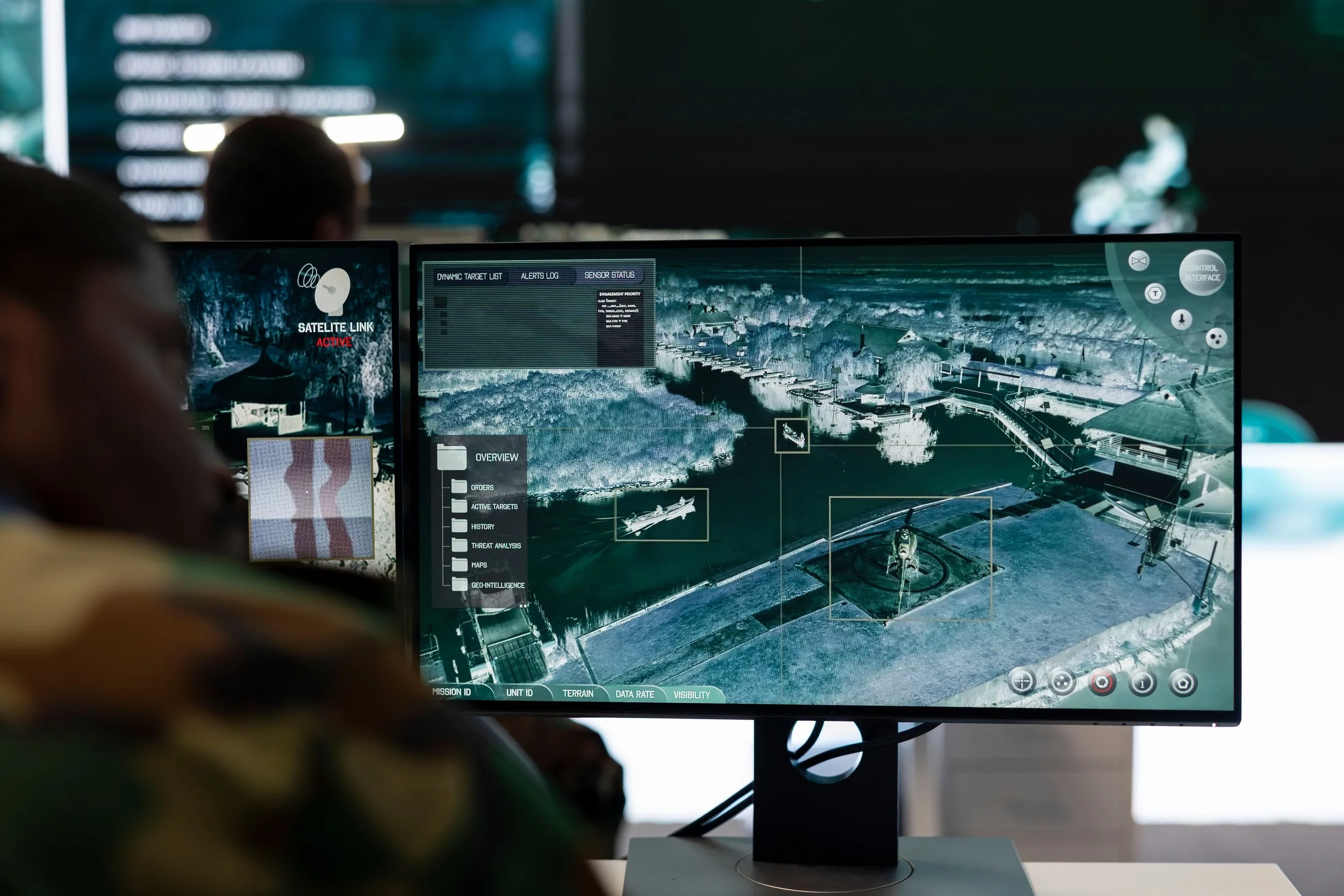
The ability to conduct SDA—tracking, characterizing and targeting hostile satellites—is key to useful space control capabilities. If a shooter cannot see a target, then they require unlimited munitions and a willingness to cause unintended harm to ensure hitting it. In other words, the easiest way to undermine the U.S. military advantage is to take out the U.S. Space Force’s SDA. And the most effective way to bolster infrastructure and military resilience of the United States and its allies is by shoring up space surveillance and domain awareness resources. More eyes from more nations tracking potentially aggressive behavior complicates an adversary’s attempt to out-maneuver an opponent and allows increased time for deciding on appropriate responses. SDA consequently has a de-escalating effect since it frustrates the possibility of conducting a secret, hostile maneuver, thereby increasing the potential for diplomacy to avert a conflict.
Maintaining Superiority in Space
The ability to command and control military forces is more important than fielding more weapons. This is a foundational concept of U.S. military doctrine. For the U.S. armed forces, space capabilities help leaders command and control resources thousands of miles from the battlefield. Remove that ability, and the United States loses space superiority and, ultimately, combat superiority.
For the United States and the EU, national security interests involving space largely align in two areas. The first is a desire to increase sovereign options. Sovereignty allows both parties to establish independent objectives and to join forces with other nations or institutions when the potential for mutual benefit exists. Dependence on another nation or institution’s space capabilities can be a liability when interests diverge. The second area of alignment is an intent to pursue and protect dual-use, military and commercial capabilities. However, as the EU chooses to focus on protection, resilience and encryption to defend its dual-use capabilities, the United States seeks to explore space control options as an additional layer of deterrence.
The weakness in the European approach is that defensive protections work only until they are overwhelmed or outmaneuvered by a competitor. Certainly, a well-planned defense can slow an opponent’s attack, but even multiple layers of defense succumb to a resolved aggressor. If contested, a nation cannot protect its own space advantage in the absence of a sovereign space warfighting capability that can reciprocate or increase the potential cost of an attack. In other words, if the EU desires sovereignty in space, it ought not be wholly dependent on U.S. space control capabilities to do so. The bloc’s policy must allow for the design and fielding of its own space surveillance forces at a minimum, if only to protect the space capabilities it requires for other elements of its security and defense.
As it starts to invest in its own dual-use satellite navigation, communication and SSA, the EU is entering a domain that the great powers already contest and exploit to achieve political ends. Still, the bloc’s emerging capabilities will help it optimize the military forces of its member states in other domains, evidence that dual-use capabilities are both a critical strength and vulnerability in conflict.
Like-minded nations and institutions must invest in the ability to protect their interests and the ability to impose their interests when they are challenged. The United States has made great strides in maintaining advantages in both areas by shifting policy to bolster control of the space domain through offensive and defensive capabilities. The country is the sole democratic nation to have done so, which has made other democracies (and even NATO) wholly dependent on the U.S. Space Force for SDA and space superiority outcomes. If it is intent on becoming a viable, sovereign space power with protected and resilient space-enabled power projection, the EU needs to adopt an SDA that mirrors that of the United States.