Space As Critical Infrastructure
· By Mario Dafnomilis ·
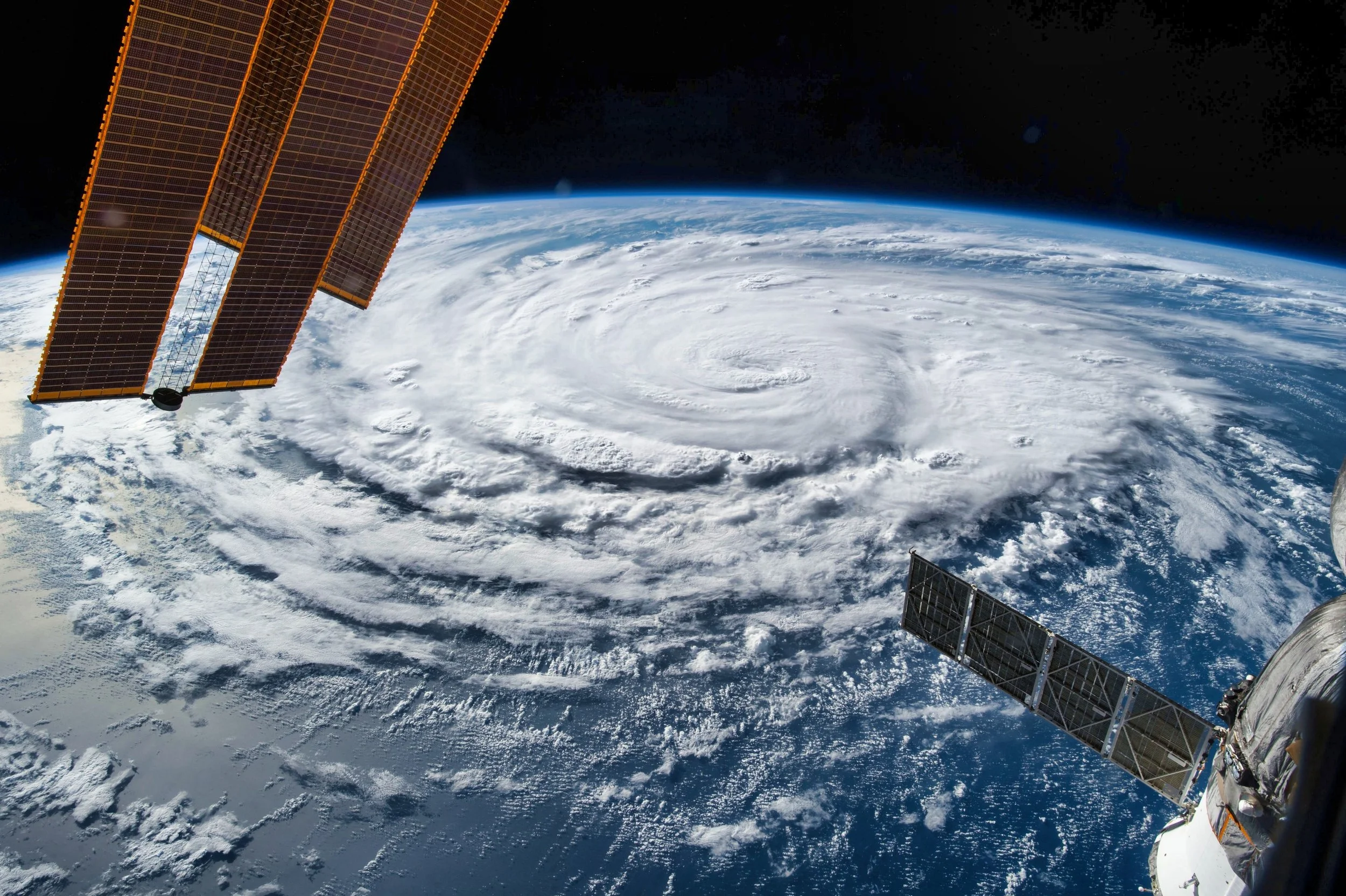
Space is no longer a distant backdrop for human development. Exploiting the cosmos has gone from a science-fiction-like, theoretical idea to a “science-fact” reality. Orbits and the orbit spectrum now advance developments in medicine, energy, finance, food, and climate action. Yet the same orbital infrastructure can also be undermined by debris, spectrum crowding, and space weather.
The “ignored child” of space policy—debris ownership and responsibility—still lacks a workable path toward collaboration and cleanup. Spectrum, too, is an environmental resource that is often ignored. If it is polluted with interference, weather and climate data degrade as surely as an orbit clutters with junk. This means that solar storms can ripple through power grids, black out communications, skew navigation, and push satellites out of their lanes.
This text argues for treating space like other critical infrastructure if it is to be preserved as a resource. Its externalities should be measured and priced, its legacy hazards removed, its spectrum reserved for science and safety, and its systems hardened against space weather. If this can be accomplished, space can become an engine for sustainability there and on Earth. With the right measures, the United States can also use space as a venue to bolster its technological competitiveness.
The challenges and opportunities that space and orbital infrastructure present can be broken down into the following core parts:
Satellites and Climate Action
Satellites are becoming the nervous system of climate action. NASA’s 2024 Plankton, Aerosol, Cloud, ocean Ecosystem (PACE) mission explores changes in plankton, aerosols and ocean color dynamics that underpin carbon flux and air quality. The agency’s Tropospheric Emissions: Monitoring of Pollution (TEMPO) satellite, whose mission has been extended through at least September 2026, provides hourly, neighborhood-scale pollution data across North America that state and local agencies can integrate with Environmental Protection Agency ground monitors. NASA’s Methane Satellite (MethaneSAT) and Carbon Mapper program help to ensure accountability for methane super-emitters at the facility level, assisting emissions-mitigation efforts in the oil, gas, waste and agriculture sectors. The agency’s Surface Water and Ocean Topography (SWOT) mission, through its public hydrology and oceanography products, adds precision to flood, drought and surface-water management. And the NASA-ISRO Synthetic Aperture Radar (NISAR) mission—launched by both groups (ISRO is the Indian Space Research Organisation) on July 30, 2025—is beginning global, routine change detection of ice, forests and land motion, allowing the radar’s “all-weather” capability to contribute to relevant policy decisions.
These examples show how far the field of geo-monitoring has come and how much further it may go. But all this progress depends on a stable observation environment. We should also never forget the "space sustainability paradox", describing how the growing use of space for Earth's sustainability goals, like digital connectivity, simultaneously increases the risks of space becoming unsustainable. In the end there is a major question: What can be tracked if Earth’s ecosystems—or space itself—collapse and become unusable for current and future generations?
Debris and Responsibility
Sustainability in space hinges on taming the “ignored child”: debris ownership and remediation. Under Article VIII of the Outer Space Treaty, launching states retain ownership and jurisdiction over their objects and fragments. There is no maritime-style salvage right.1 Removing derelict material, therefore, requires consent of the owing state or non-state actor, even when the removing object endangers others. That legal reality complicates remediation markets unless consent, data sharing and escrowed permissions are built into international treaties.
Still, remediation practices and regulations are advancing. The Active Debris Removal by Astroscale-Japan (ADRAS-J) mission has performed close-approach characterization of a Japanese rocket body. Interestingly, it was the first time a commercial mission has rendezvoused with and surveyed a large piece of unprepared space debris. The European Space Agency’s (ESA) ClearSpace-1, which aims to be the world's first debris removal mission, plans to remove a derelict adapter— a discarded payload adapter ring that no longer serves a purpose and remains in orbit—under the agency’s Zero Debris approach. In addition, the International Organization for Standardization’s protocol ISO 24113:2023 tightens debris-mitigation standards, and performance bonds—posted at licensing and returned upon verified deorbit of debris—could internalize disposal costs. Lastly, the Secure World Foundation has built consensus on debris removal based on the organization’s 2024 joint statement with LeoLabs .
Spectrum as an Environmental Resource
The belief that the orbital spectrum 2 is irrelevant to sustainability on Earth is one of the most pervasive misunderstandings in the field of Earth–space interaction. Earth-observation sensors (e.g., microwave radiometers and synthetic aperture radar) and safety-critical services require interference-free bands since spectrum misuse degrades climate and weather data just as surely as debris degrades an orbit. The outcome of the 2023 World Radiocommunication Conference added protections to and clarified the sharing of several satellite and Earth-exploration spectrum bands while advancing new satellite-to-satellite links. NASA and the International Telecommunication Union frame spectrum stewardship as essential to mission continuity and environmental monitoring. The new policy frontier is “spectrum footprints”, which quantify an operator’s aggregate interference risk (the potential for unwanted elements or activities to disrupt a system, process, or signal, leading to malfunctions, data loss, or security threats), publicize that risk (as emissions inventories do), and reward interference-minimizing designs in spectrum licensing and auctions.
Space Weather and Earth Resilience
The main concern regarding Earth–space interaction is the natural link between space and Earth, which is the connection between the weather in the former and resilience on the latter. The May 2024 solar maximum underlined that severe storms threaten:
electric power grids due to geomagnetically induced currents
space station human crews due to radiation exposure, requiring them to have storm shelters and to consider scheduling optimization for their activities, which should also spur improved Sun–Earth L1 Lagrange point monitoring from the Interstellar Mapping and Acceleration Probe (IMAP) and the National Oceanic and Atmospheric Administration’s (NOAA’s) Space Weather Follow-On – Lagrange Point 1 (SWFO-L1) mission
radio-communication outages from X-ray and particle events that black out high-frequency links
navigation degradation via ionospheric scintillation (the rapid fluctuation of radio waves caused by irregularities in the Earth's ionosphere)
satellite damage and premature reentry from increased drag and charging (as witnessed by the 2022 Starlink loss
Treating these as sustainability risks means embedding Space Weather Prediction Center (SWPC) alerts into grid operations, aviation routing, and constellation flight dynamics as standard “climate-like” governance.
Microgravity and Health Innovation
Delving further into this issue, we could understand that microgravity is rapidly evolving from a scientific curiosity to a platform for tangible health outcomes. Biomanufacturing in orbit is maturing: has advanced toward printable human tissue constructs, a stepping-stone for organ patches. In parallel, Varda’s first reentry mission has demonstrated commercial drug crystallization workflows that can improve formulation quality. Together, these efforts point to a near-term pipeline where space-grown materials and biologics complement Earth-based production rather than simply proving a concept.
Space-Based Solar Power
Space-based solar power has moved from thought experiment to early system trials. Researchers have beamed power in space and tested RF power transfer to Earth—evidence that integrated, end-to-end beaming architectures are feasible. For U.S. energy resilience, SBSP’s unique value is dispatchable, geography-agnostic clean power to harden microgrids for critical services during climate and space-weather disruptions. Policy work now should set transparent efficiency, frequency, and safety thresholds before larger pilots scale.
Traffic Coordination as a Public Good
Finally, traffic coordination is definitely a public good. The U.S. Department of Commerce’s Office of Space Commerce is building TraCSS to support civil space traffic coordination—an essential scaffold for consent-based debris removal, dynamically establishing keep-out zones during storms. If TraCSS is paired with an open-source anomaly ledger, (e.g. a public logbook of unusual or risky events), (drawing on NOAA’s anomaly databases), insurance, licensing and performance-bond pricing can be aligned with operator performance.
Conclusion
A sustainable space environment is undoubtedly an engine for Earth-based science. Microgravity bio-innovation, space-based solar power pilots for resilient clean energy, and next-generation climate mapping are already occurring. But to keep space usable, debris must be governed as owned hazards requiring consent-ready remediation. In addition, spectrum must be managed as a finite environmental common, and space-weather resilience must be strengthened for grids, aircraft, ships, satellites and astronauts. Specifically, to enhance its competitiveness, the United States should fund remediation demonstrations and performance-bond pilot schemes, treat “spectrum footprints” like pollutant emissions on Earth, and fully operationalize TraCSS as digital public infrastructure. The payoff would be profound: secure orbits and quiet spectrum that reliably deliver technological breakthroughs for Earth’s climate, and consequently for humanity, for decades to come.
1. The right to claim ownership of recovered items from a wreck or disaster
2. Refers to the specific segments of the radiofrequency spectrum that are allocated for use by satellites in orbit for telecommunications, broadcasting, weather monitoring, and other services. It is a finite and valuable global resource that national governments and international bodies like the International Telecommunication Union (ITU) regulate to prevent interference and ensure efficient utilization for various satellite-based applications